Logo Partnership
June 2026

Investing, innovating, supporting your projects!

Edito

A new chapter begins

Image
km
Karim MEBAREK
CCO - BOURBON
3 min

In recent years, our Group has undergone profound transformation. Following a period of restructuring and financial consolidation, we have rebuilt a solid foundation. This milestone was not an end in itself, it marks the beginning of a new chapter. Today, we are moving forward with a clear ambition: to strengthen our positions, enhance our operational efficiency, and continue supporting our clients in the most dynamic offshore markets. 

This transformation has been particularly reflected in the evolution of our fleet. The redelivery of around forty vessels to ICBCL could have represented a major disruption. Instead, it became an opportunity to demonstrate our ability to adapt. Through careful management of our contracts and resources, we successfully reorganized our fleet, reactivating certain vessels, optimizing the use of available units, and integrating newbuilds, particularly in the crew boat segment. This momentum has also translated into a significant expansion of our fleet since the beginning of the year, with the acquisition, reactivation, and commissioning of thirteen new offshore support vessels, as detailed in this edition. 

This agility has enabled us to ensure full continuity for our clients and maintain our operations without disruption. 

Beyond these adjustments, the key point lies elsewhere: despite these changes, we remain a leading player in the industry. Our fleet and international footprint continue to position us as a key partner for the major players in our sector. This is reflected in the trust placed in us by our partners and in our ability to be sustainably involved in major oil & gas projects. 

More broadly, we are witnessing a geographical rebalancing of the market, with the South Atlantic emerging as one of the main hubs of global offshore growth. Guyana continues to grow rapidly, while Suriname and Namibia are attracting increasing attention. At the same time, the gradual reopening of Mozambique is reinforcing the strategic importance of Southern Africa. Our strategy is therefore to support these dynamics by strengthening our presence in our historical regions - Africa and the Americas - while remaining attentive to new opportunities. 

These prospects are unfolding in a market environment that is both contrasted and globally dynamic. In certain segments, particularly large PSVs, demand is especially strong. A lack of newbuilds and the aging of many vessels are creating increasing pressure on available supply, while new offshore projects in the Atlantic and other regions are progressively absorbing existing capacity. 

In this evolving landscape, our priority remains unchanged: staying close to our customers, anticipating market trends, and maintaining the highest operational standards. 

The page we are opening today is that of a more agile Group, refocused on its strengths and resolutely forward-looking. The transformations we have undertaken now give us the means to seize the opportunities of a rapidly evolving sector. 

And the story we are writing together is only just beginning.

Edito
Expert insight

Engine reliability: the winning equation

Image
ku
Jakub Kopiszka
Sales Manager - MG Marine Power Solution
5 min

Ensuring equipment availability is a critical challenge for maritime operations. From preventive maintenance and the management of critical spare parts to modular solutions, Jakub Kopiszka, Sales Manager at MG Marine Power Solution, shares his experience and his vision of how engine maintenance is evolving across the maritime industry.
 

From a technical and operational perspective, what are the key factors that ensure the long-term reliability and availability of Caterpillar engines? 

From a technical and operational perspective, engine reliability and availability rely on three main factors: the robustness of their design, rigorous maintenance, and sound operating practices. 

Preventive maintenance forms the foundation, with regular tasks such as oil changes, filter replacements, and inspections. It is now complemented by predictive approaches, such as oil analysis and real-time monitoring of engine parameters. You would be surprised by what can be detected several weeks before a failure: abnormal metal particles, contamination, viscosity degradation. This is one of the most cost-effective tools available, yet it remains underused in the industry. 

Lubrication management also plays a critical role. Oil selection, adherence to change intervals, and contamination control are key factors, as many failures are linked to lubricant degradation rather than design issues. 

Cooling system integrity is another essential aspect: careful maintenance of heat exchangers, thermostats, and coolant fluid helps prevent risks such as overheating, corrosion, or cavitation. 

Finally, the human factor remains decisive. A significant share of failures results from handling errors or non-compliance with procedures. Proper team training and rapid access to technical support therefore play a key role in significantly reducing risks and ensuring long-term engine reliability. 
 

How does the dedicated safety stock arrangement help secure maintenance operations and reduce equipment downtime? 

This project is particularly close to my heart, as it was born out of listening to the concrete needs from the field. Before the implementation of the safety stock, a failure of a critical component could immobilize an engine for several days, or even several weeks, while waiting for the part to be delivered. In maritime operations, such delays have a direct impact on schedules and contractual commitments. 

The safety stock acts as a true buffer: by identifying critical components that are difficult to source quickly, we have been able to anticipate their availability. As a result, in the event of an issue, response times are now measured in hours rather than weeks. This proactive approach can reduce unplanned vessel downtime by up to 40%. 

Beyond parts availability, this system also strengthens confidence in maintenance planning. Teams can intervene at the earliest warning signs and schedule repairs during planned maintenance windows, rather than reacting to unexpected failures. 

Finally, this stock is not static: it is regularly reviewed and adjusted based on operational experience and actual needs. It is a dynamic tool designed to sustainably support operational performance. 
 

Could you explain what a long block engine is and what advantages this solution offers in terms of supply lead times, costs, and technical flexibility? 

A long block refers to the core of an engine already assembled: the engine block, crankshaft, camshafts, connecting rods, pistons, liners, cylinder heads, and timing system. Other components can generally be recovered from the damaged engine, as around 85% of parts are typically reusable after a failure. 

Its main advantage is time savings. Rather than sourcing and assembling numerous components in the event of a major breakdown, a ready-to-install central module is already available in stock. This significantly reduces the time between failure and return to service, especially considering that the delivery of a new engine can take more than 40 weeks. 

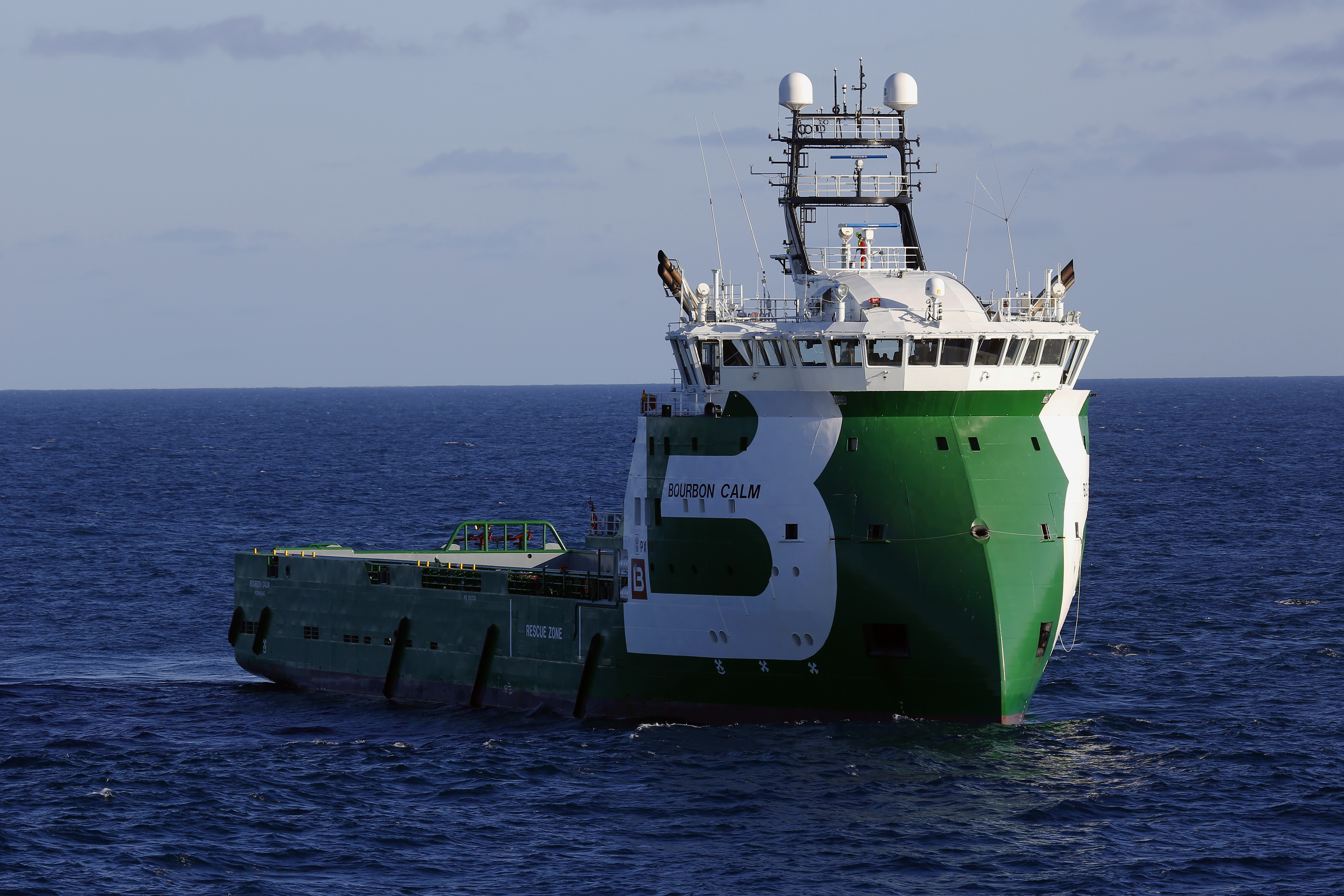
This solution has already proven its value within the Bourbon fleet, notably on the Bourbon Trieste, Bourbon Liberty 320, Bourbon Calm, and Bourbon Explorer 510, delivering significant gains in both time and cost. Installing a long block also reduces onboard labour hours, as most internal components are already pre-assembled. Finally, since these are spare parts rather than a brand-new engine, the engine retains its existing serial number and certifications, simplifying administrative procedures. 

For operations where service continuity is critical, having a long block in stock is therefore an effective lever to strengthen operational resilience. 
 

What technical levers or feedback from experience can help operators better prevent engine failures? And how will technical maintenance in the maritime sector evolve in the coming years? 

Most engine failures are preceded by early warning signs; the challenge is therefore to have the right tools and practices in place to detect them in time. Among the most effective solutions are oil analysis, the MG Engine Link monitoring tool, and augmented reality Smart Glasses, ideally used together in a complementary way. 

MG Engine Link enables real-time engine monitoring and diagnostics, while Smart Glasses facilitate remote technical assistance and onboard troubleshooting. Combined, these tools provide a comprehensive view of engine condition and performance. 

Beyond technology, operational feedback remains essential: every failure must be analysed to understand its root causes and improve maintenance practices. 

Finally, technology does not replace the partnership between supplier and operator—it strengthens it. Data must be properly interpreted, parts must be available at the right time, and close collaboration between teams makes it possible to turn information into action. This is precisely the approach developed with BOURBON since 2022, and one that is expected to become even more critical in the future.  

Image
1
Image
2
Paroles d'expert
Their stories

A first for BOURBON: a PSV converted into a gravel pack unit

2 min

At the request of a client in the oil and gas industry, a BOURBON Platform Supply Vessel (PSV) was mobilised for an unprecedented operation in its history: a gravel pack. For the first time, a vessel typically dedicated to offshore logistics transport was fully reconfigured to become a temporary industrial platform designed for well completion operations. This operation marks a significant evolution in the use of support vessels, demonstrating their ability to be adapted to complex technical missions beyond their traditional scope. 


The principle of gravel packing is applied before a well is brought into production. It involves injecting into the wellbore a mixture of brine (a technical fluid) and calibrated gravel, designed to form a natural filter. This system retains sand and solid particles while allowing hydrocarbons to flow, thereby ensuring long-term well stability and performance. 

To meet the requirements of this operation, the PSV was transformed into a true mobile treatment unit. Its deck was fitted with fully integrated industrial equipment enabling the storage, preparation, and conditioning of the mixture directly onboard. High-capacity silos, pumping systems, filtration units, and supporting steel structures were installed and secured on the vessel. 

This transformation required significant upfront engineering work to ensure vessel stability despite the addition of heavy and concentrated loads. The structural design, deck strength, and the vessel’s ability to maintain dynamic positioning close to drilling installations were all subject to rigorous technical validation. 

Beyond the technical dimension, the vessel was also integrated into an unusual project organisation. In addition to its crew, specialised teams came onboard to manage the operation, temporarily turning the PSV into both a worksite and a living base for all personnel involved. This co-activity required enhanced coordination and strict adherence to offshore safety standards. 

While the intervention itself lasts only a few days, its impact is long-lasting: the filter installed in the well remains in place throughout its entire production life, directly influencing the quality and continuity of operations. 

This first gravel pack operation carried out onboard a PSV demonstrates the adaptability of offshore assets and paves the way for new, more flexible and integrated models for the use of offshore support vessels in technical oilfield operations.  

Their stories
Successful together

13 new vessels, an investment of $180 million

2 min

Since the beginning of 2026, BOURBON has strengthened its fleet with 13 new offshore support vessels, representing an investment of over $180 million. This expansion, supported by the Group’s new shareholders, demonstrates its ability to rapidly deploy assets tailored to the needs of offshore markets. 
 

As part of this expansion, BOURBON has acquired six diesel-electric vessels from Minsheng Financial Leasing (five Platform Supply Vessels (PSVs) and one 80-ton bollard pull Anchor Handling Tug Supply vessel (AHTS)), as well as two large-capacity PSVs from ICBC, the Bourbon Front and the Bourbon Clear

At the same time, two diesel-electric AHTS vessels have been reactivated, demonstrating BOURBON’s ability to rapidly return existing assets to service in response to market demand. 

Fleet development has also continued with the delivery of Bourbon Evolution 810, a next-generation subsea vessel designed for deepwater Inspection, Maintenance & Repair (IMR) operations. Delivered in Singapore, the vessel entered service on May 7 in Malaysia for a survey operation, equipped with a BOURBON UHD ROV, before moving on to a long-term contract in South Asia in the second quarter of 2026. 

Finally, two 27-meter crew boats, delivered in late 2025 in Congo, have begun a five-year contract, illustrating the new generation of vessels developed by the Group. For Gaël Bodénès, CEO of BOURBON, this momentum confirms the positive impact of the transformation underway: “In just a few months, we have strengthened our fleet, secured significant investments, and quickly returned vessels to service for our customers.” 

“Supported by the operational improvements implemented, BOURBON’s financial position has now been restored. We continue to explore opportunities to sustain this growth over the long term,” adds François Sordet, the Group’s CFO. 

With a fleet of 159 vessels operating in more than 30 countries, BOURBON continues to pursue its ambition: supporting major offshore energy players with innovative and sustainable maritime services.

Successful together
in pictures

The brand-new Bourbon Evolution 810 takes the stage!

The Bourbon Evolution 810 further strengthens BOURBON’s IMR (Inspection, Maintenance & Repair) fleet in the deepwater subsea operations segment. As the latest vessel in the Evolution series, it marks a new milestone following the commissioning of the first Bourbon Evolution 800 vessels in the early 2010s, already recognized for their performance in deep offshore environments. 

In an IMR market characterized by an ageing global fleet and limited newbuild activity, this new vessel enables BOURBON to offer a modern and versatile unit designed to meet the current demands of complex subsea operations. 

Designed to operate at depths of 2,500 to 3,000 meters, the Bourbon Evolution 810 features diesel-electric propulsion, a DP3 dynamic positioning system, two active heave-compensated cranes (150 t and 40 t), and a 1,200 sqm deck. It can accommodate up to 105 people onboard and also integrates firefighting and oil pollution response capabilities. 

The vessel is set to begin its first contract in India, further strengthening BOURBON’s presence in the international subsea market.
 

In pictures
Shared views

The maritime sector facing the challenge of reducing emissions

Image
cl
Christelle LOISEL
Head of CSR - BOURBON
5 min
Image
cm
Casper MARE
Head of QHSES - BOURBON

In a maritime sector heavily dependent on fossil fuels, reducing CO₂ emissions is a major challenge. BOURBON is committed to this transition through initiatives to improve the energy efficiency of its operations, modernize its fleet, and explore new technical solutions. The objective is clear: to reduce the carbon footprint of its activities while maintaining a high level of operational performance. Explanations from Christelle Loisel, BOURBON’s Head of CSR, and Casper Mare, the Group’s Head of QHSES. 
 

As with many companies today, you have conducted a carbon footprint assessment. What role has it played in shaping your environmental strategy? 

Christelle Loisel: The maritime sector is directly impacted by climate and energy challenges, and we are fully aware of this. We needed a clear and objective view of our environmental impact. Conducting a carbon assessment therefore came quite naturally a few years ago as a starting point - to accurately measure our greenhouse gas emissions across all our activities, and above all, to establish a solid foundation for action. 
 

What are the main sources of CO₂ emissions in our operations today? 

C.L.: Unsurprisingly, fuel consumption by the fleet accounts by far for the largest share of our emissions (over 70%), to which are added emissions related to the procurement of parts and services for fleet maintenance, newbuild orders, as well as the transportation of our seafarers. However, there is a sector-specific characteristic to consider: under chartering contracts, fuel is paid by our clients. This means that BOURBON does not have full control over all the levers for action. Reducing these emissions therefore necessarily requires a collaborative approach, working closely with our clients and partners. 


What actions have already been implemented to reduce environmental impact? 

Casper Mare: Historically, BOURBON’s OSV fleet has included a large number of diesel-electric vessels (around 90% today). This has long enabled us to optimize fuel consumption more effectively and reduce emissions. 

For several years now, BOURBON has been implementing very concrete actions to lower its environmental footprint. One of the key levers is the gradual modernization of the fleet, with the integration of more energy-efficient vessels, particularly in the crew boat segment. BOURBON is also running pilot projects focused on innovative technical solutions. These initiatives are subject to rigorous evaluation, in order to assess their real benefits, operating conditions, and limitations before any potential large-scale deployment. Examples include leveraging data to improve energy performance with Opsealog, as well as the use of hull-cleaning robots. 

As part of its partnership with Opsealog, BOURBON has, for instance, rolled out the Marinsights solution at scale, following a six-month pilot conducted in 2024 on 25 vessels. Thanks to the electronic logbook and the Marinsights platform, onboard data (fuel consumption, activity, routes, standby time) is consolidated, analyzed, and shared through monthly reports with both crews and management. The objective is to encourage the adoption of better operational practices based on concrete and comparable data. 

Lastly, we have chosen to remain open-minded. Reducing emissions means being willing to test new solutions, even when their effectiveness has not yet been fully proven. In 2025, for example, we took part in a test in Angola of an additive conducted by TotalEnergies on four of our vessels. 

Biofuels, for their part, are not yet a sustainable solution in our areas of operation, notably due to supply chain and infrastructure constraints. However, the situation is evolving. On our side, we are ready to engage with any solution that contributes to reducing emissions,whatever form it may take. 
 

What are the medium and long-term emission reduction targets? 

C.L.: Our approach is deliberately progressive and pragmatic. We are targeting a 75% reduction in greenhouse gas emissions by 2050 compared to 2020 levels, in line with IEA (International Energy Agency) scenarios (<2°C). This trajectory is structured around the following roadmap: 

• 2025–2030: stabilizing the fleet and establishing the conditions for success; 

• 2025–2035: deploying energy efficiency levers; 

• 2035–2045: integrating low-carbon energy solutions. 
 

What do you see as the main challenge in accelerating the environmental transition in the maritime sector? 

C.M.: In my view, the main challenge lies in significantly reducing the carbon emissions of a sector that remains historically very dependent on fossil fuels, while at the same time preserving both operational performance and economic competitiveness. 

Accelerating the environmental transition means addressing several challenges in parallel. There is, of course, the issue of technological innovation - particularly in propulsion systems and alternative fuels. There is also the need to mobilize substantial investments to modernize fleets, which cannot be achieved overnight. But above all, this transition will only succeed through close cooperation across the entire value chain: shipowners, clients, and energy stakeholders. No one can move forward alone. The key challenge, therefore, is to strike a sustainable balance between energy transition, technological constraints, and economic requirements, in order to continue to build our path towards a responsible and resilient maritime model.

Shared views
Panorama

Podcast Crew stories: the daily life of an HSE officer

1 min

With Crew Stories, BOURBON gives a voice to the men and women who bring the Group to life every day, at sea and onshore. Through this podcast series, the aim is to share authentic journeys, experiences, and perspectives, rooted in operational realities. 


In this new episode, we meet Michael Marvin, HSE Officer on board the MPSV Bourbon Enterprise. From his background in the merchant navy to his commitment to the offshore sector, he reflects on a role at the heart of operations, where safety guides every decision. 

From team coordination to risk prevention and a constant demand for excellence, he offers insight into his daily work, the challenges of offshore life, and what he sees as BOURBON’s key strength: a strong culture of safety, teamwork, and high standards. 

A candid and practical testimony that highlights the commitment of teams in the field.

Panorama